
De-grey your wood wisely
De-greying wood: the best way
If you truly want to give wood its natural color back, a wood de-greyer is without a doubt the best choice. Products such as Xyladecor Ontgrijzer voor alle Buitenhout tackle the cause of greying and clean the wood deep into the pores without damaging the surface.
Apply the de-greyer to wet wood with a brush, let the product work for a while, and scrub lightly in the direction of the wood grain. Then rinse thoroughly with water and let the wood dry well. The result is a fresh, even wood color that is ready for protection again. With this method, you are certain that your wood structure remains intact; other methods are often riskier.

More wood de-greying methods
In addition to wood de-greyers, there are other ways to tackle greyed wood, although they are not always as effective.
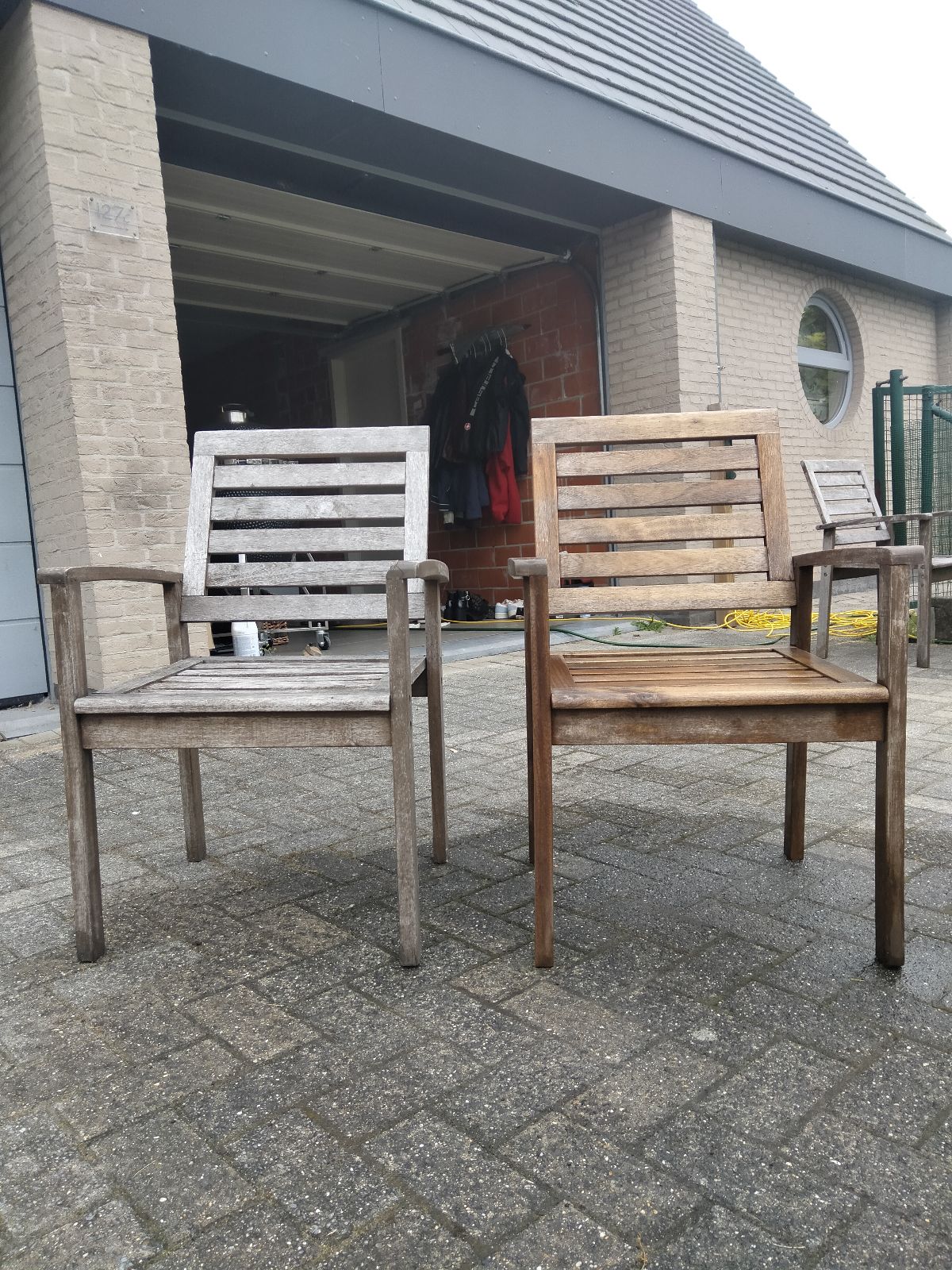
Sanding or air-pressure cleaning (sandblasting) can work because you remove the top, affected layer, but it is labor-intensive and not without risk. If you choose this method, we recommend mechanical sanding or hiring a professional for air-pressure cleaning.
Bleach is often used as a quick fix, but this cleans rather than de-greys. If you do choose this method because you have it at home, we recommend letting the bleach work long enough—think of about 1 hour. This in combination with the use of a high-pressure cleaner. Note: use a nozzle with a flat spray, do not choose high pressure, and keep some distance from the surface to be cleaned. Finally, use a scrubbing brush to restore the greyed wood to its original state. As you can read, this method involves many steps. These steps are not without risk, so be very careful when applying this method. Or choose the safest and most sustainable option we mentioned first: a wood de-greyer.
3 possible ways to de-grey wood
| Method | Effectiveness | Risk | Recommended? |
|---|---|---|---|
| Wood De-greyer | ⭐⭐⭐⭐ | low | ✅ Best choice |
| Sanding / Air-pressure cleaning | ⭐⭐⭐⭐ | medium | ⚖️ Yes, but labor-intensive |
| Bleach + high-pressure cleaner | ⭐⭐⭐ | high | ❌ Possible, but less recommended |
After de-greying wood, comes prevention
A common project is de-greying a fence. After cleaning/ de-greying, it is important to protect your wood immediately, for example by staining your greyed fence with a quality product such as Xyladecor Tuinhoutbeits. This prevents UV rays and moisture from doing their work again and keeps the color beautiful for longer. Staining a greyed fence not only provides protection but also immediately gives your garden a well-maintained appearance.
Post-treatment is also essential for hardwood species such as padauk, which are often used for cladding. After de-greying, you can bring out the warm wood color again with a stain such as Xyladecor Beits Natuurlijk Effect Mix. This protects against UV rays and slows down the natural greying process. This way, you maintain the appearance of fresh wood without compromising on durability.

Which stain to choose
Read our stain guideOther projects you want to protect against greying? Check out our stain guide and discover which stain best fits your application.
What happens if you leave greyed wood as it is?
Leaving greyed wood as it is seems harmless, but more happens than you think.
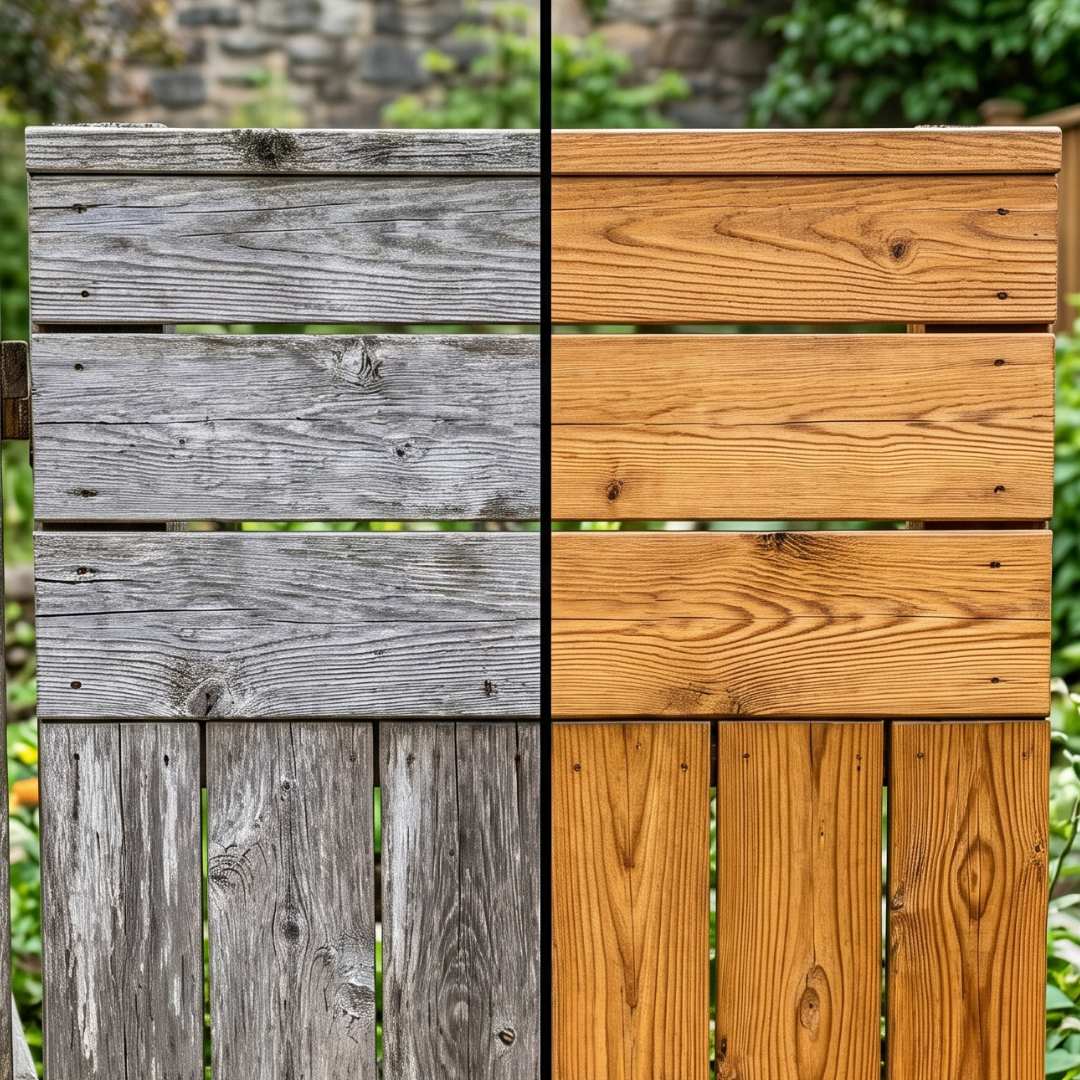
The grey color occurs because UV rays break down the lignin in the wood, causing the top layer to lose its cohesion. Rain washes away these affected particles, making the wood more porous and rougher.
As a result, dirt and moisture get more grip, and fungi or algae can develop faster. In the long run, this can lead to accelerated wear of the surface. Although greying itself is not immediately structurally harmful, it does make the wood more vulnerable. Without protection, the wood will deteriorate faster. Regular cleaning and treatment therefore significantly extend the lifespan of your wood. Those who want to maintain the natural look are well advised to protect it in a controlled manner.
Creating a grey wood color
As mentioned above, it is better not to leave your weathered/greyed wood as it is. But not everyone wants to restore the original wood color. For many people, the greyed look has its own charm. With the right stain, you can consciously create this effect. This gives you an even, stylish grey shade where wear and discoloration are less noticeable. At the same time, you effectively protect the wood against UV rays and moisture, which significantly extends its lifespan.
Do you want to apply that greyed effect beautifully and evenly? Then these stains from Xyladecor are highly recommended. For garden houses and furniture, there is Xyladecor Houtbeits Vergrijsd Effect, for terraces Xyladecor Terrasbeits Natuurlijk Effect, and for cladding Xyladecor Gevelbetimmeringen. This way, you choose the right protection for each application, with a consistent and natural-looking grey result.

What should you remember about de-greying wood and restoring greyed wood?
- ❌ If you leave your greyed wood as it is, your wood becomes rough, which leads to a lot of dirt adhesion and more risk of fungi.
- ✅ De-greying: Use a powerful wood de-greyer to restore the natural color and smoothness of the wood.
- ✅ Protecting: Apply a stain immediately after de-greying; this is the only way to counteract or delay greying.
- ✅ Maintaining: Check the wood every 3 years. By applying a new layer of stain in time, you prevent having to go through the entire de-greying process again.
Recent blogs
Would you like to tackle other outdoor projects as well as removing grey stains from outdoor wood? If so, you can find inspiration or useful tips in our blog posts below. From painting a garden shed in a fun colour to repairing peeling facade paint.


